
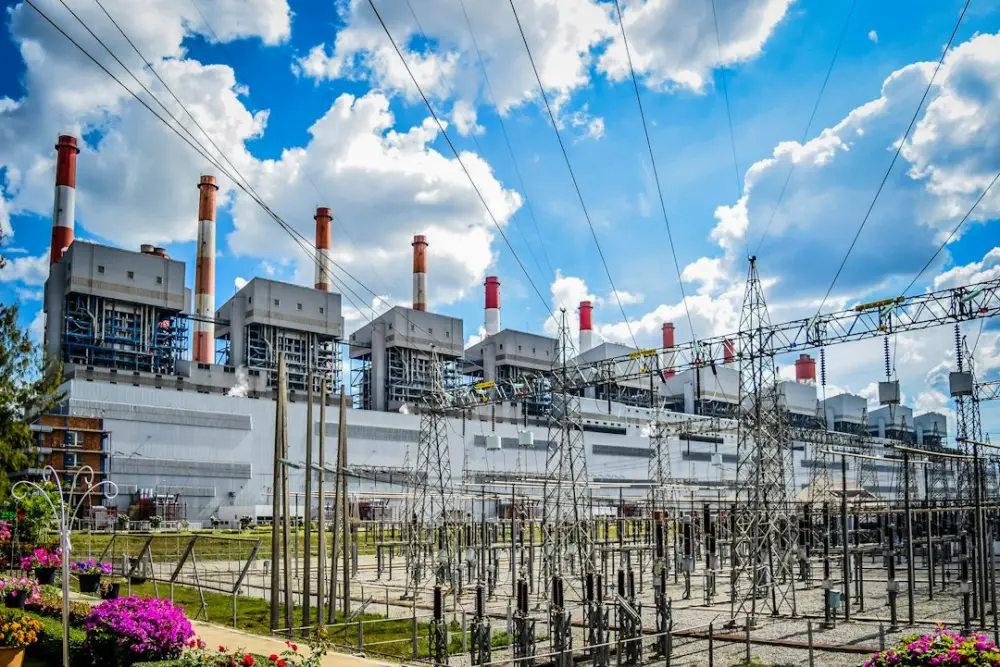
Long-term energy asset planning is the strategic management of physical energy infrastructure—including power plants, transmission grids, and renewable installations—throughout their entire lifecycle. This process involves forecasting multi-decade demand, assessing environmental risks, and aligning capital investments with sustainability targets to ensure reliable energy delivery and financial viability over 25 to 50 years.
Planning helps operators compare maintenance, upgrades, and retirement before an asset fails. Historical performance and clearly stated assumptions support those decisions. Connecting these choices to long-term operational efficiency helps teams weigh downtime, reliability, and total ownership costs across the portfolio.
What is Long-Term Energy Asset Planning?
At its most fundamental level, long-term energy asset planning is the roadmap for how an organization will build, maintain, and eventually retire the hardware that generates and moves power. Unlike short-term operational planning, which might focus on the next fiscal quarter or a seasonal peak, long-term planning looks at the horizon of 20 to 50 years. It treats every piece of equipment—from a single transformer to a massive offshore wind farm—as a component of a larger, evolving system.
Consider a utility provider in the Pacific Northwest. Their long-term planning must account for shifting snowpack levels that affect hydropower capacity through 2050. If the data suggests a 15% decrease in reliable water flow over the next three decades, the plan must dictate whether to supplement that loss with solar arrays or to invest in pumped hydro storage. This is not just about engineering; it is about financial hedging against environmental shifts.
This planning also encompasses the legal and social license to operate. As carbon accountability becomes more stringent, long-term planning incorporates the projected cost of carbon credits and the potential for "stranded assets"—infrastructure that becomes a financial liability before its physical life ends because it no longer meets regulatory standards or market demand.
Strategic Asset Planning vs. Traditional Maintenance
Traditional maintenance is tactical and often reactive. It focuses on the "how" and "when" of keeping a specific machine running. If a bearing fails on a pump, maintenance replaces it. If a solar inverter reaches its five-year service interval, maintenance cleans the filters. While essential, this approach is limited because it assumes the asset should continue to exist in its current form indefinitely.
Strategic asset planning, conversely, asks "why" the asset exists and whether it should be replaced by something more efficient. For example, a facility manager overseeing a fleet of aging diesel backup generators might face a choice: spend $200,000 on a major overhaul to extend their life by ten years, or invest $1 million in a microgrid consisting of solar PV and lithium-iron-phosphate (LFP) batteries. The traditional maintenance view favors the $200,000 fix. The strategic planning view looks at the fuel costs, carbon taxes, and reliability gains over the next twenty years, often finding that the higher upfront investment yields a much lower levelized cost of energy (LCOE).
This strategic approach requires a deep integration of data. It moves away from siloed spreadsheets and toward integrated asset management systems where the maintenance history of a turbine is weighed against the market price of electricity and the declining cost of alternative technologies.
Key Elements of a Sustainable Energy Roadmap
Building a roadmap that survives the volatility of the energy market requires several core pillars. These elements ensure that the plan is not just a static document but a living strategy that can adapt to technological breakthroughs or economic shifts.
1. Multi-Scenario Demand Forecasting
Planners can no longer rely on a simple 2% annual growth projection. Modern roadmaps must account for the electrification of transport, the rise of energy-intensive data centers for AI, and the potential for localized energy production (prosumers). A robust roadmap models multiple scenarios: one where electric vehicle adoption is aggressive, and another where industrial hydrogen production becomes the primary load driver.
2. Risk and Resilience Assessment
Physical assets are increasingly exposed to extreme weather events. A sustainable roadmap identifies these vulnerabilities. For instance, a coastal substation built in 2026 must be designed with 2070 sea-level projections in mind. This involves hardening infrastructure—elevating equipment, reinforcing transmission towers against higher wind speeds, and diversifying the geographic location of generation assets to prevent single-point-of-failure outages.
3. Capital Allocation and Financial Modeling
Long-term planning dictates how capital is deployed. This involves balancing the "stay-in-business" CAPEX (keeping current assets running) with "growth" CAPEX (investing in new technology). A concrete example is the transition from traditional gas peaker plants to long-duration energy storage (LDES). Planners must determine the exact year when the falling cost of iron-air batteries makes them a more viable investment than a new gas turbine.
Global Perspectives: Namibia, Panama, and Regional Integration
Energy asset planning varies significantly by geography, but the move toward long-term visibility is a global trend. In Namibia, the government and energy stakeholders are looking as far ahead as 2070. Namibia’s First Energy Outlook is a prime example of planning for a specific resource—in this case, green hydrogen. By mapping out the vast solar and wind resources in the Tsau //Khaeb National Park, Namibia is planning infrastructure that won't just serve local needs but will position the country as a global exporter. This requires coordinating with the Southern African Power Pool (SAPP) to ensure that regional transmission lines can handle the massive influx of power from new renewable hubs.
In Central America, Panama is focusing on building a resilient electricity sector through its "Plan de Expansión del Sistema Interconectado Nacional" (PESIN). Panama’s challenge is balancing its high hydroelectric capacity with the need for firm power during dry seasons, which are becoming more unpredictable. Their long-term planning involves integrating more wind and solar while upgrading the grid to handle the bi-directional flow of energy from distributed resources. This regional integration, where Panama can trade power with its neighbors via the SIEPAC line, is a critical component of their asset strategy.
These examples show that long-term planning is not just for wealthy or highly industrialized nations; it is a survival mechanism for any grid looking to remain stable under the dual pressures of climate change and shifting global trade routes.
Digital Tools and AI in Modern Asset Management
The complexity of managing thousands of interconnected assets over 50 years exceeds the capacity of traditional human oversight. This is where exploring the future of energy: innovation becomes practical. Digital twins—virtual replicas of physical assets—are now central to the planning process. By creating a digital twin of a wind farm, operators can simulate how different maintenance schedules or weather patterns will affect the mechanical integrity of the turbines over decades.
Artificial Intelligence (AI) and machine learning are being used to move from predictive maintenance to prescriptive maintenance. While predictive maintenance tells you when a part might fail, prescriptive maintenance uses AI to suggest the best course of action based on a variety of factors. For example, an AI system might analyze a transformer's temperature and vibration data, then cross-reference it with the current high price of copper and the lead time for a replacement unit. It might suggest running the transformer at 80% capacity for the next six months to delay failure until a cheaper replacement window opens, rather than performing an immediate, expensive emergency repair.
Furthermore, Geographic Information Systems (GIS) are indispensable for long-term site selection. Planners use GIS to overlay solar irradiance data with land-use restrictions, protected wildlife habitats, and proximity to existing high-voltage lines. This allows for the identification of the most viable sites for the next 30 years of development before the first shovel even hits the ground.
Aligning Asset Strategies with Long-Term Energy Goals
For a first planning exercise, start with one asset and a documented set of assumptions:
- Build an asset record. Collect its age, service role, operating history, maintenance records, and known constraints.
- Define the decision. State whether the review concerns continued operation, an upgrade, replacement, or retirement, and assign a responsible owner.
- Compare scenarios. Document assumptions about demand, maintenance, downtime, and costs; include a scenario in which conditions differ from the baseline.
- List evidence gaps. Ask the relevant engineering, operations, and finance specialists which inspections, estimates, or approvals are needed before deciding.
- Set review triggers. Record what new evidence would change the plan and when the team will revisit it.
The ultimate goal of asset planning is to ensure that the physical reality of the infrastructure matches the strategic goals of the organization and the regulatory environment. In 2026, this almost always involves a transition toward lower carbon intensity. However, the transition must be managed without sacrificing reliability or financial solvency.
One practical takeaway for resource managers is the implementation of a "phased retirement" strategy. Instead of shutting down a fossil fuel plant abruptly, which can destabilize the local grid and cause economic shock, a long-term plan might involve converting the site into a synchronous condenser facility. This allows the existing grid connection and spinning mass of the old generators to provide essential inertia and voltage support for the grid, even after the boilers are no longer burning coal or gas. This repurposing of assets is a hallmark of efficient planning.
Organizations should also focus on standardized reporting metrics. By adopting frameworks such as those provided by the International Energy Agency (IEA) or local energy commissions, firms can ensure their long-term plans are transparent to investors and regulators. This transparency reduces the cost of capital, as lenders are more likely to provide favorable terms to companies that can demonstrate a clear, data-backed path for their assets over the next quarter-century.
Effective management requires a constant feedback loop. As new data on battery degradation or carbon capture efficiency emerges, the 50-year plan must be adjusted. This iterative process is what allows an energy provider to remain competitive. At Covey Park, we focus on these intersections of operational efficiency and long-term resource management. By looking at the infrastructure trends shaping tomorrow’s grid, from regional integration in Southern Africa to digital twin adoption in the Americas, we provide the context necessary for navigating a sector that is no longer defined by stability, but by the ability to manage rapid change through disciplined, long-term asset planning.